Electric Trikes
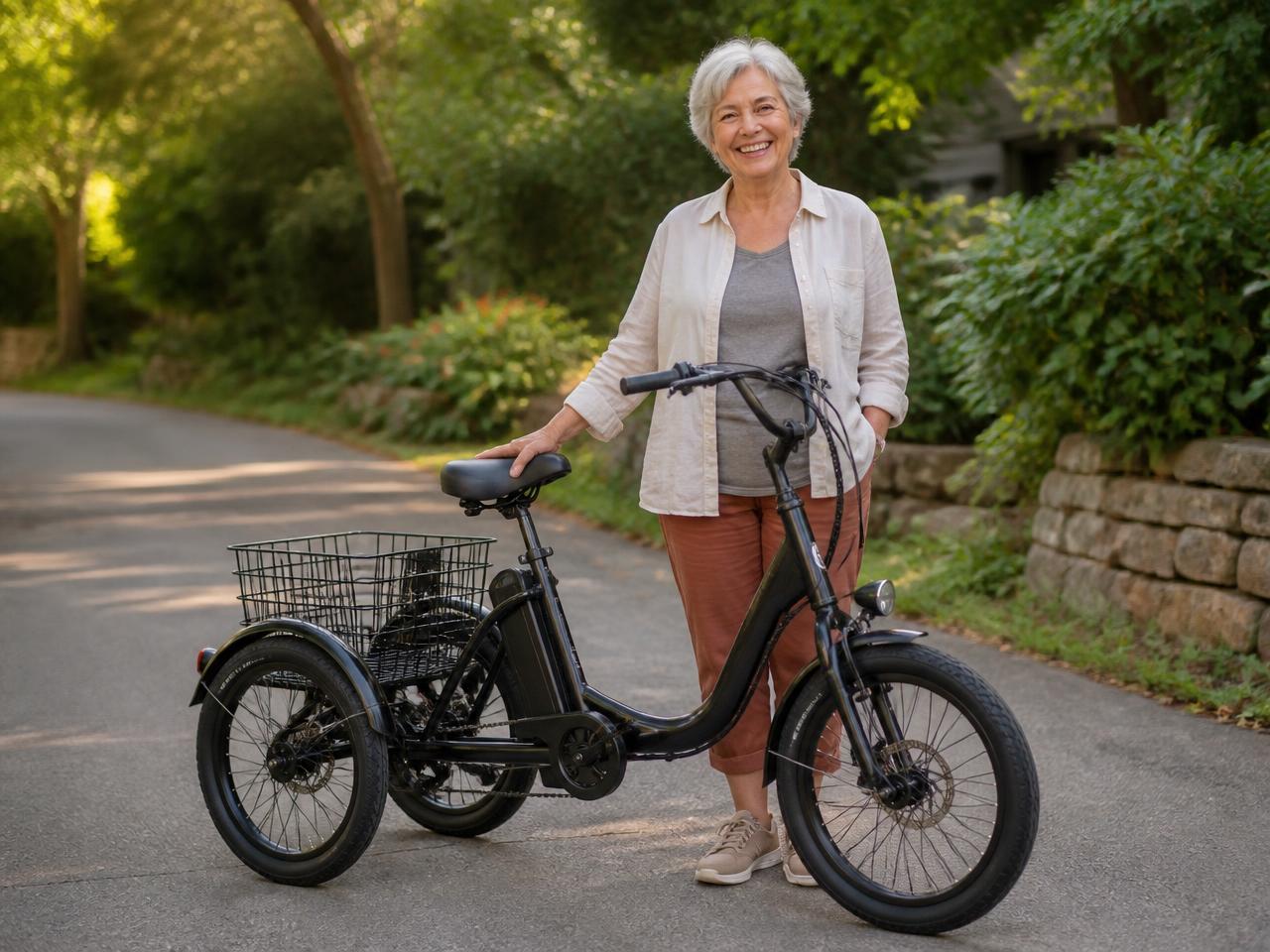
Electric trikes add a third wheel, and with it a kind of stability that no two-wheeled bicycle can offer: the machine stands up on its own at a standstill. For riders managing balance difficulties, recovering from injury, returning to cycling later in life, or simply wanting to stop at a light without putting a foot down, that changes what is possible. Trikes are also genuinely useful load carriers, since most designs include a substantial rear basket or cargo area between the back wheels.
Riding a trike is not the same as riding a bicycle, and the difference is worth understanding before you buy. You do not lean into corners — you steer, and the trike stays upright, which means you need to slow down more than you expect for tight turns and be mindful of the outside wheel on cambered or off-camber surfaces. The overall width is greater than a bicycle, so narrow gates, bike lane bollards and standard bike racks may not accommodate one. Most riders adapt within a few short sessions, but the first few rides should be on quiet, flat, open ground.
When comparing models, check the total width and turning radius against where you will ride and store the trike, and confirm the maximum payload, which includes the rider plus everything in the basket. Look at the seat design — many trikes use a wide comfort saddle or a backrest seat — and at the step-through height, which is the main determinant of how easily you can get on and off. Braking is important on a heavier vehicle with a higher load: check the brake type and whether a parking brake is included.
Assembly on trikes is more involved than on bicycles, particularly the rear axle, basket and brake setup. We recommend professional assembly; you can request a quote from any product page.